Exploring the Future of Space Exploration: Mars Missions
The Future of Space Exploration: Mars Missions
Humanity’s fascination with Mars has driven decades of exploration and scientific inquiry. As technology advances, the dream of sending humans to the Red Planet is becoming a reality. This article delves into the current state of Mars missions, the challenges involved, and the future prospects of human exploration on Mars.
Current State of Mars Missions
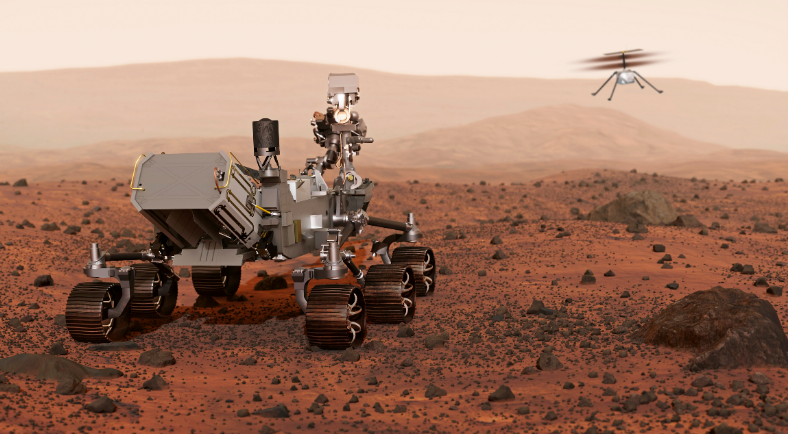
The focus key phrase here is “Mars missions”. Numerous robotic missions have been sent to Mars, providing invaluable data about the planet’s geology, climate, and potential for life. Notable missions include NASA’s Perseverance rover, which landed on Mars in February 2021, and the InSight lander, which is studying the planet’s interior.
These missions have confirmed the presence of water in the form of ice and detected organic molecules, suggesting that Mars may have once harbored conditions suitable for life. The data collected by these missions is paving the way for future human exploration.
Challenges of Human Mars Missions
Sending humans to Mars presents numerous challenges. One of the most significant is the vast distance between Earth and Mars, which requires advanced propulsion systems and significant resources for a journey that could take six to nine months each way.
Radiation exposure is another critical concern. Unlike Earth, Mars lacks a protective magnetic field and thick atmosphere, exposing astronauts to harmful cosmic radiation. Developing effective shielding and medical countermeasures is essential to ensure the safety of crew members.
Technological Innovations and Preparations
Innovative technologies are being developed to address the challenges of Mars missions. Space agencies and private companies are working on advanced propulsion systems, such as nuclear thermal propulsion, to reduce travel time and improve mission efficiency.
Life support systems that can provide air, water, and food for extended periods are also being developed. In-situ resource utilization (ISRU) technologies, which involve using Martian resources to produce necessities like oxygen and fuel, are crucial for long-duration missions.
The Role of International Collaboration
Mars missions require significant collaboration between space agencies, governments, and private companies. International partnerships, such as those between NASA and the European Space Agency (ESA), are essential for pooling resources, expertise, and technology to achieve the ambitious goal of human exploration on Mars.
Collaborative efforts also extend to private companies like SpaceX, which is developing the Starship spacecraft designed to transport humans to Mars. These partnerships are accelerating the pace of technological advancements and making Mars missions more feasible.
Future Prospects and Timeline
The timeline for human missions to Mars is ambitious but achievable. NASA aims to send astronauts to Mars in the 2030s as part of its Artemis program, which includes the establishment of a sustainable presence on the Moon to serve as a stepping stone for Mars exploration.
SpaceX, led by Elon Musk, has even more aggressive plans, aiming to send the first crewed mission to Mars by the mid-2020s. While these timelines may shift due to technological and logistical challenges, the momentum towards human exploration of Mars is undeniable.
Conclusion
The future of space exploration is bright, with Mars missions at the forefront of this exciting frontier. Despite the challenges, advancements in technology, international collaboration, and the unwavering human spirit of exploration are bringing us closer to making human missions to Mars a reality. As we continue to push the boundaries of space exploration, Mars represents the next giant leap for humanity, promising new discoveries and inspiring generations to come.