NASA’s recent exercise has uncovered a startling scenario: a 72% chance of an asteroid hitting Earth in 2038. Here’s a detailed look at this hypothetical situation and what it means for planetary defense.
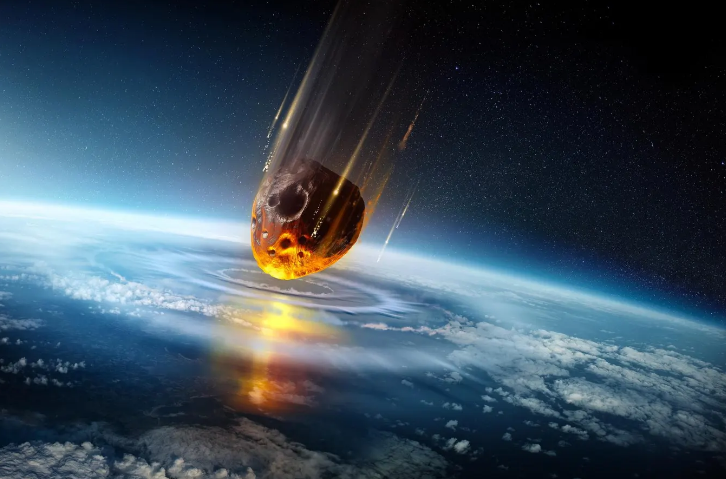
NASA’s latest hypothetical exercise reveals a 72% chance of an asteroid hitting Earth on July 12, 2038. This assessment aims to evaluate our readiness and response strategies for a potential asteroid impact.
NASA’s Planetary Defense Exercise
In April 2024, NASA conducted the fifth biennial Planetary Defense Interagency Tabletop Exercise. The summary of this exercise, unveiled on June 20, was held at the Johns Hopkins Applied Physics Laboratory (APL) in Laurel, Maryland. The event included nearly 100 representatives from various US government agencies and international collaborators.
Purpose of the Exercise
While no significant asteroid threats are currently known, the exercise aimed to assess the Earth’s ability to respond effectively to a potentially hazardous asteroid. The goal was to provide valuable insights into the risks, response options, and opportunities for collaboration in such scenarios.
Key Insights and Findings
Challenging Scenarios
Lindley Johnson, the planetary defense officer emeritus at NASA Headquarters in Washington, highlighted the uncertainties faced during the exercise. He emphasized that a large asteroid impact is potentially the only natural disaster humanity can predict years in advance and take action to prevent.
Hypothetical Scenario
Participants considered potential national and global responses to a hypothetical scenario where a never-before-detected asteroid had a 72% chance of hitting Earth in approximately 14 years, specifically on July 12, 2038.
Preliminary Observations about the Asteroid
Initial observations could not precisely determine the asteroid’s size, composition, and long-term trajectory. This highlighted the need for improved detection and assessment capabilities.
Identified Gaps in Readiness
The exercise summary identified several key gaps in the current planetary defense readiness:
- Decision-Making Processes: The processes and risk tolerance levels are not well understood.
- Readiness for Space Missions: There is limited readiness to quickly implement necessary space missions.
- Global Coordination: Timely global coordination of messaging and response efforts needs improvement.
- Disaster Management Plans: Current asteroid-impact disaster management plans are not well-defined.
Use of DART Mission Data
This exercise was the first to utilize data from NASA’s DART (Double Asteroid Redirection Test) mission. DART demonstrated that a kinetic impactor could change the trajectory of an asteroid, providing a potential method for planetary defense.
Future Developments: NEO Surveyor
To ensure timely detection and response to potentially hazardous asteroids, NASA is developing the Near-Earth Object Surveyor (NEO Surveyor), an infrared space telescope designed to discover most potentially hazardous near-Earth objects years before they pose a threat. The NEO Surveyor is scheduled to launch in June 2028.
Asteroid Impact- Conclusion
NASA’s hypothetical exercise underscores the importance of preparedness and international collaboration in addressing the threat of a potential asteroid impact. The insights gained from this exercise will inform future strategies and technologies, ensuring we are better equipped to protect our planet from such threats. Stay updated with ‘Not Viral’ for more in-depth coverage on planetary defense and other critical space missions.