
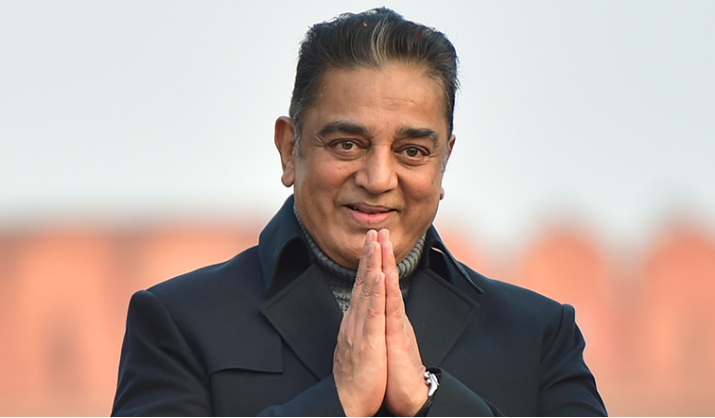
Kamal Haasan, a name synonymous with versatility and brilliance, has been a towering figure in Indian cinema for over six decades. His journey from a child artist to a revered actor, director, producer, and politician is a testament to his immense talent and dedication. Known for his transformative roles and pioneering contributions, Kamal Haasan’s career is a rich tapestry of artistic excellence and cultural impact.
Early Life and Entry into Cinema
Kamal Haasan was born on November 7, 1954, in Paramakudi, a small town in Tamil Nadu, India. His father, D. Srinivasan, was a lawyer and his mother, Rajalakshmi Srinivasan, was a homemaker. Kamal’s entry into cinema was serendipitous; he made his acting debut at the tender age of four in the Tamil film “Kalathur Kannamma” (1960), for which he won the President’s Gold Medal for Best Child Artist. This early accolade set the stage for what would become a prolific and illustrious career.
Rising Star in Tamil Cinema
In the 1970s, Kamal Haasan transitioned from child artist to leading man, quickly becoming one of Tamil cinema’s most sought-after actors. His collaboration with director K. Balachander was particularly significant. Films like “Apoorva Raagangal” (1975) and “Moondram Pirai” (1982) showcased his ability to portray complex characters with depth and nuance.
One of Kamal’s landmark performances came in the film “Nayakan” (1987), directed by Mani Ratnam. His portrayal of Velu Naicker, a character inspired by the real-life Bombay underworld don Varadarajan Mudaliar, earned him the National Film Award for Best Actor. The film is considered a classic and remains a touchstone in Indian cinema for its narrative style and Kamal’s riveting performance.
Pushing Boundaries with Experimentation
Kamal Haasan’s career is marked by his willingness to push the boundaries of Indian cinema. He is known for experimenting with different genres and roles, often choosing projects that challenge societal norms and explore unconventional themes. One such film is “Indian” (1996), directed by S. Shankar, where Kamal played a dual role as a father and son. The film addressed issues of corruption and justice, earning Kamal another National Film Award for Best Actor.
In “Hey Ram” (2000), Kamal not only starred in but also directed and produced the film. The historical drama, set against the backdrop of India’s partition and Mahatma Gandhi’s assassination, was a critical success and showcased Kamal’s prowess as a filmmaker. His performance as Saket Ram, a man grappling with loss and revenge, was both powerful and poignant.
The Transformative Performances
Kamal Haasan’s ability to undergo physical and psychological transformations for his roles is legendary. In the film “Chachi 420” (1997), he played the role of a woman, adapting to the character with remarkable ease and earning widespread acclaim for his comedic timing and acting skills.
One of his most ambitious projects was “Dasavathaaram” (2008), where he played ten different characters, each with distinct looks and personalities. This film is a testament to his versatility and dedication, as he underwent extensive makeup and prosthetic sessions to bring each character to life.
Contributions to Indian Cinema as a Filmmaker
Kamal Haasan is not just an actor; he is a filmmaker with a vision. His directorial ventures often tackle bold and socially relevant themes. In “Vishwaroopam” (2013), he delved into the world of international terrorism, while “Uttama Villain” (2015) explored themes of mortality and legacy.
His passion for cinema extends to his role as a producer, where he has supported various projects through his production company, Raaj Kamal Films International. His efforts have significantly contributed to elevating the standards of Indian cinema, both in terms of storytelling and technical expertise.
Political Career and Social Activism
In addition to his contributions to cinema, Kamal Haasan has been actively involved in social and political issues. In 2018, he launched his political party, Makkal Needhi Maiam (MNM), with the aim of providing a new alternative to the existing political landscape in Tamil Nadu. His political journey is driven by a commitment to social justice, transparency, and governance reform.
Kamal’s activism is not limited to his political aspirations. He has been vocal about various social issues, including education, healthcare, and women’s rights. His philanthropy work and support for numerous charitable causes reflect his deep sense of social responsibility.
Personal Life and Legacy
Kamal Haasan’s personal life has been as eventful as his professional career. He was married to Vani Ganapathy, a classical dancer, and later to actress Sarika, with whom he has two daughters, Shruti Haasan and Akshara Haasan. Both daughters have followed in his footsteps, carving their niches in the entertainment industry.
Kamal’s influence on Indian cinema is immeasurable. He has inspired countless actors and filmmakers with his commitment to his craft and his relentless pursuit of excellence. His legacy is not just in the numerous awards and accolades he has received but also in the lasting impact he has made on the art of storytelling.
Conclusion
Kamal Haasan is more than just an actor; he is a cinematic maestro whose contributions span across acting, directing, producing, and even politics. His journey from a child artist to a multifaceted icon is a testament to his talent, hard work, and unwavering dedication. As he continues to evolve and explore new horizons, Kamal Haasan remains a beacon of inspiration in Indian cinema, leaving an indelible mark on the hearts of audiences and the history of film.


