
Sunita Williams, a prominent astronaut, has made significant contributions to space exploration. Her inspiring journey captivates many, and her achievements continue to motivate future generations.
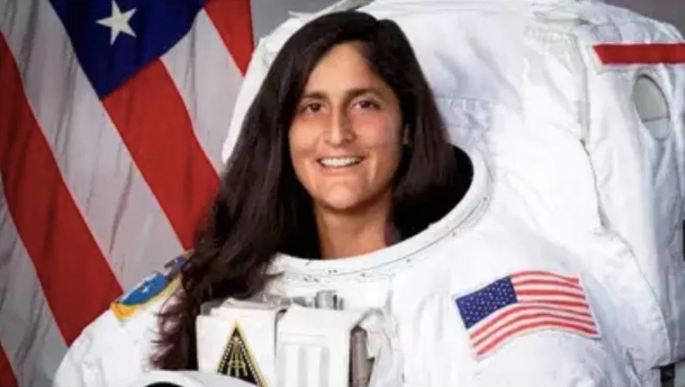
Early Life and Education
Sunita Williams was born on September 19, 1965, in Ohio, USA. She grew up with a passion for science and aviation, which led her to pursue a degree in physical science from the United States Naval Academy. Later, she earned a Master’s degree in Engineering Management from Florida Institute of Technology. Her early education laid the groundwork for her future in space.
Naval Career
Before becoming an astronaut, Sunita Williams served as a naval officer. She became a helicopter pilot and later a test pilot, gaining extensive experience in flying and aeronautics. This background was crucial in preparing her for the challenges of space travel. Her dedication and skill in the Navy were instrumental in her selection as an astronaut candidate.
Becoming an Astronaut
In 1998, Sunita Williams was selected by NASA to join its astronaut program. This marked the beginning of her illustrious career in space exploration. She underwent rigorous training, learning about space systems, robotics, and extravehicular activities (spacewalks). Her perseverance and commitment were evident as she prepared for her missions.
Space Missions
Sunita Williams has participated in multiple space missions, showcasing her resilience and expertise. Her first mission was aboard the Space Shuttle Discovery in 2006, which took her to the International Space Station (ISS). During this mission, she set a record for the longest single spaceflight by a woman at that time, spending 195 days in space. She conducted four spacewalks, demonstrating her skill and adaptability in challenging environments.
Her second mission was aboard the Soyuz spacecraft in 2012, where she again served on the ISS. During this mission, she took on the role of commander, becoming the second woman to command the ISS. Her leadership and technical abilities were key to the mission’s success.
Contributions and Legacy
Sunita Williams has significantly contributed to scientific research and space exploration. Her work on the ISS involved conducting experiments in biology, physics, and materials science. These experiments have provided valuable insights into the effects of long-duration spaceflight on the human body, contributing to future space missions.
Her achievements have inspired many, especially young women interested in STEM fields. Sunita Williams is not only a role model for aspiring astronauts but also an advocate for education and diversity in science and technology.
Awards and Recognition
Throughout her career, Sunita Williams has received numerous awards and honors. She has been recognized for her contributions to space exploration and her service in the Navy. Her achievements have been celebrated globally, reinforcing her status as a pioneer in the field of space exploration.
Sunita Williams’ journey from a naval officer to a renowned astronaut exemplifies determination and excellence. Her contributions to space science and her role as a mentor to aspiring scientists make her a significant figure in the world of space exploration. Sunita Williams continues to inspire and encourage future generations to reach for the stars, leaving a lasting legacy in the field of space travel.
In summary, Sunita Williams has not only made her mark in space but also in the hearts of many who look up to her as a symbol of perseverance and success. Her story serves as a beacon of hope and inspiration for those who dream of exploring the unknown.


